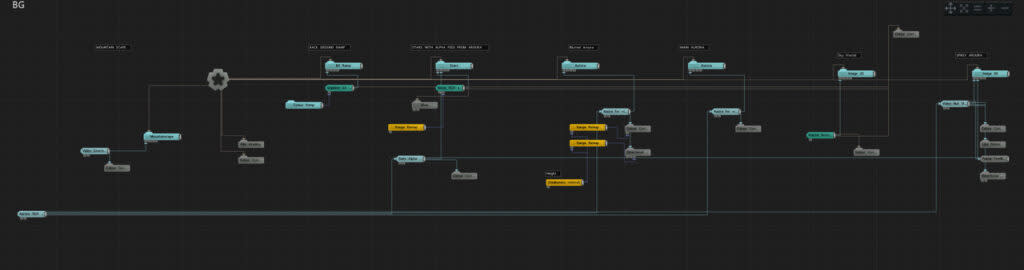
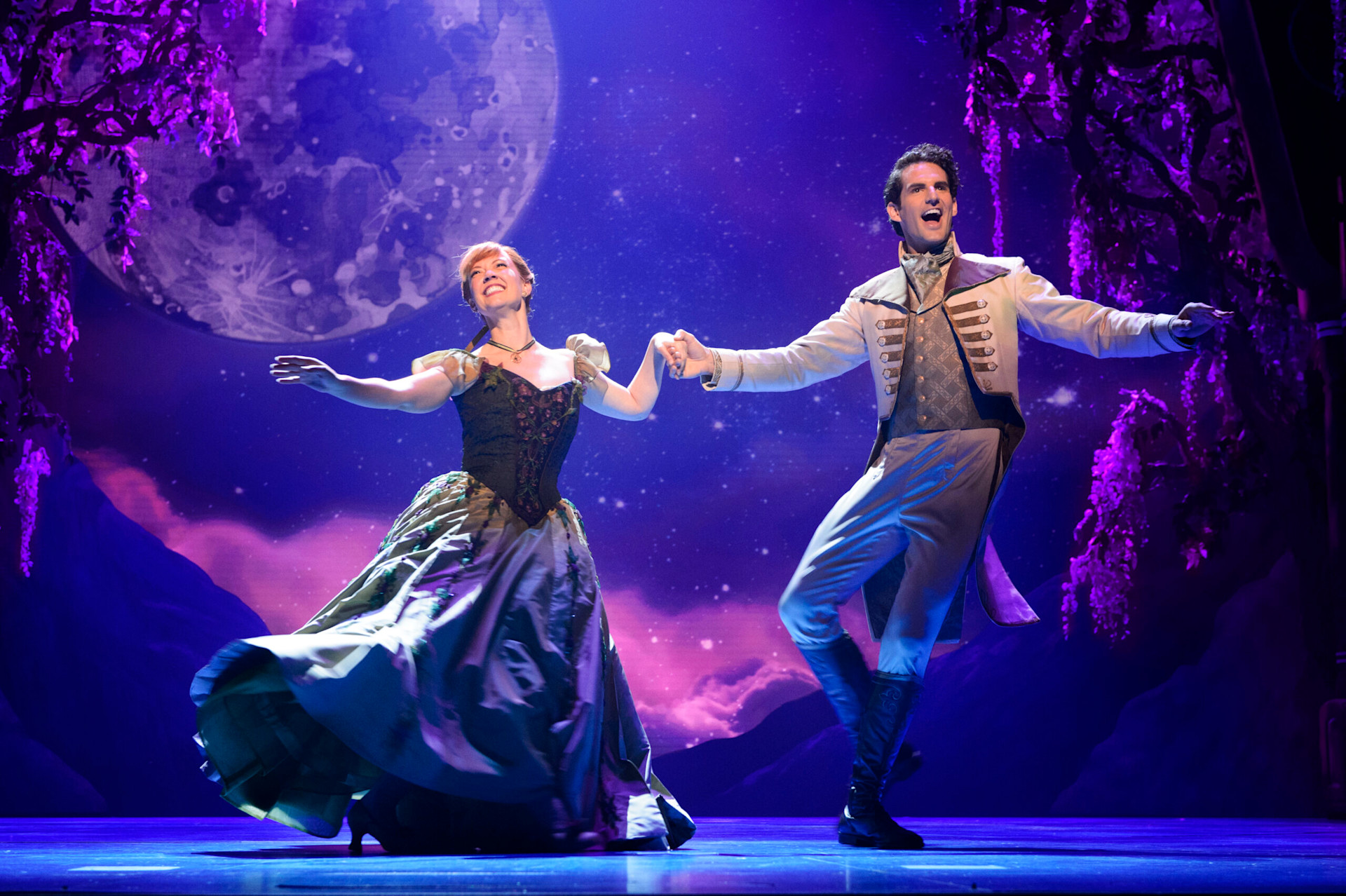
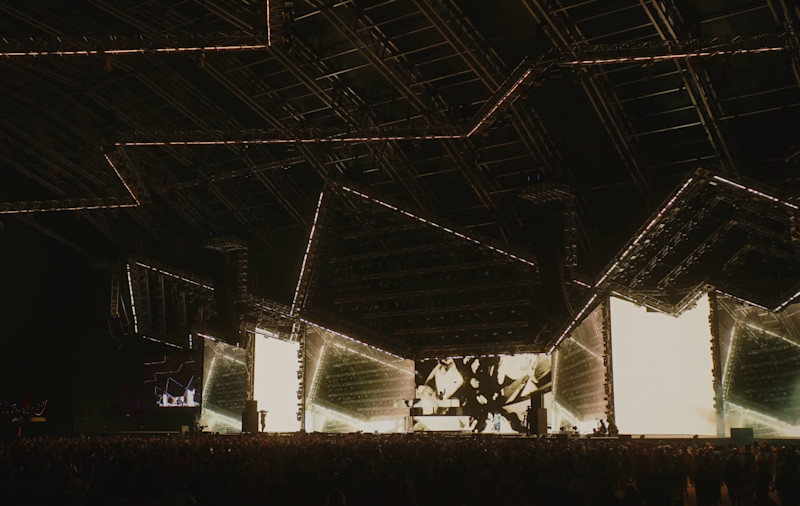
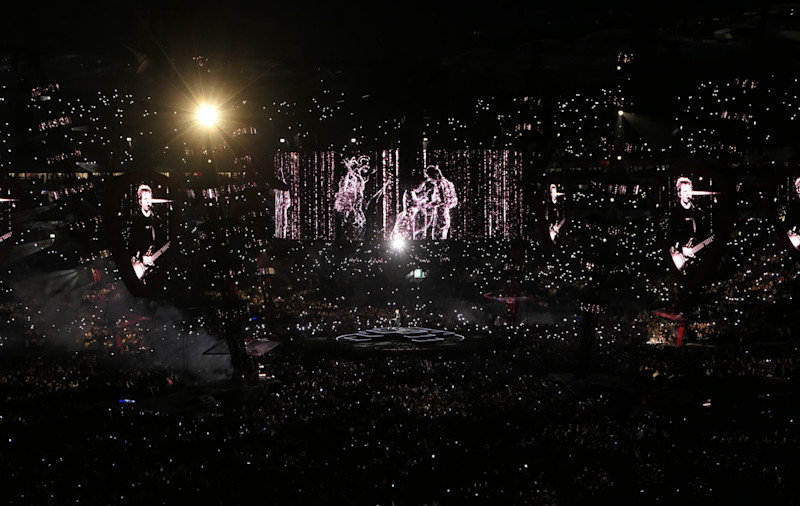
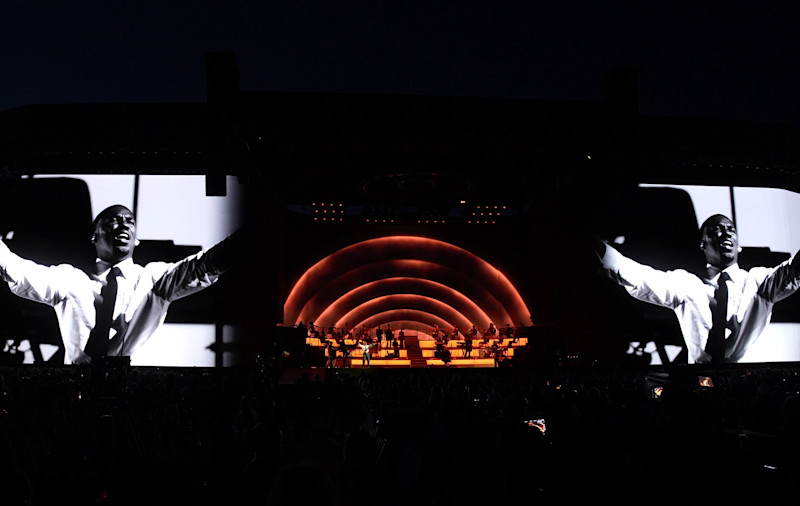
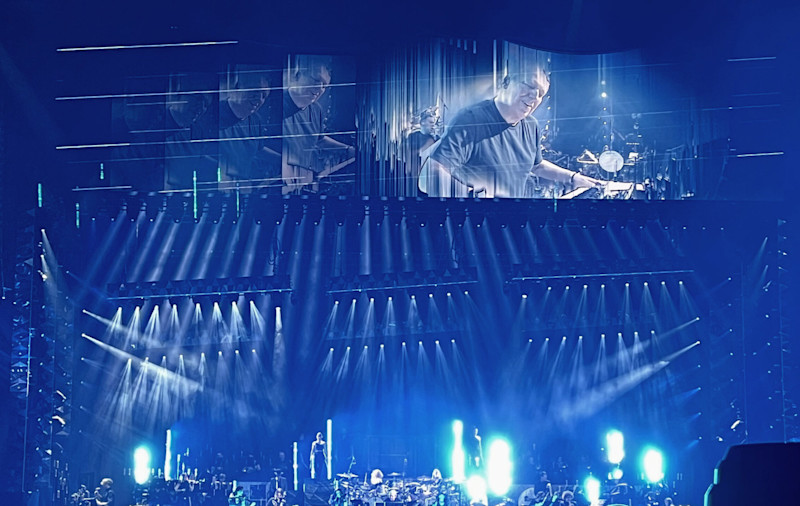
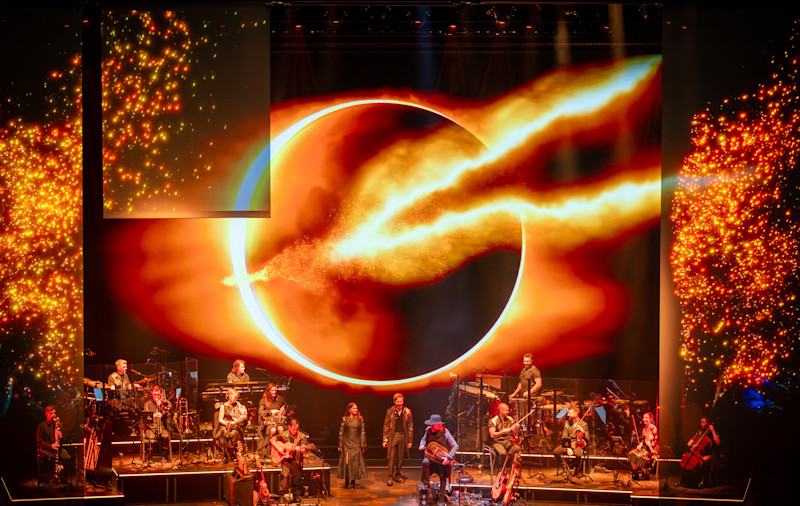
Using Notch, FRAY were able to build a single Northern Lights application that could be used for the entire show. Using over a hundred exposed parameters, they could control every part of its physical form: streak length, sky ramp colour, cloud cover, star amounts, accent colours, the complexity of the curves, reactionary curves, contractions, twists, positioning in the sky, rotation, alpha background. The entire look could change on cue with just a few changes in keyframes. Once these parameters had been set the animation could endlessly regenerate, creating unique compositions that would never loop. During the show one look transitions into the next without the need to ever crossfade, the animations dynamically transform. Using audio-reactive inputs, the live orchestra can cue changes in the Aurora’s colours and motion. Frozen’s Northern Lights became a seemingly sentient entity in itself. For Finn, “It was revolutionary to see the content shift in shape, speed, and colour, with no crossfade and no locking timecode”.
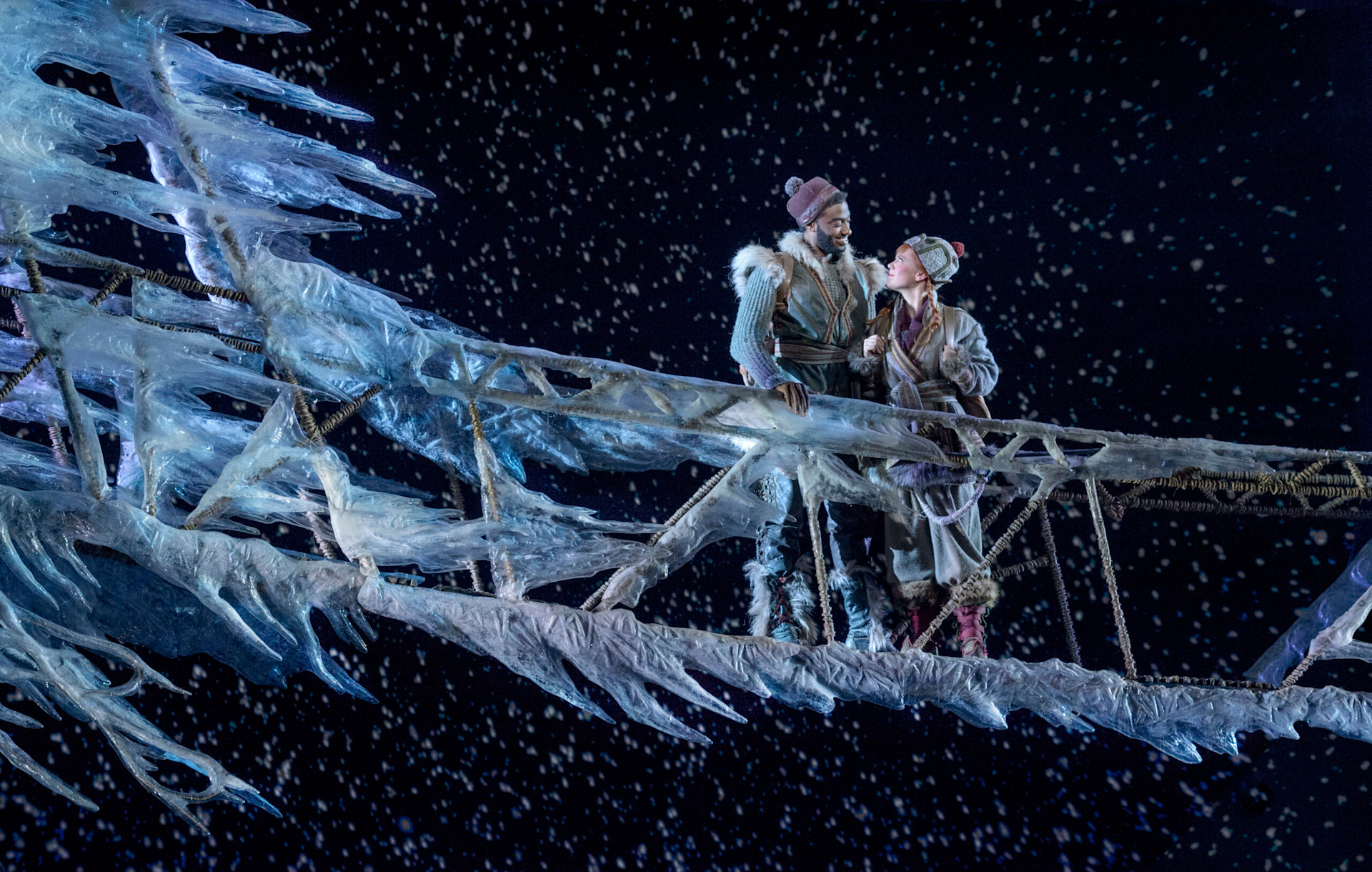
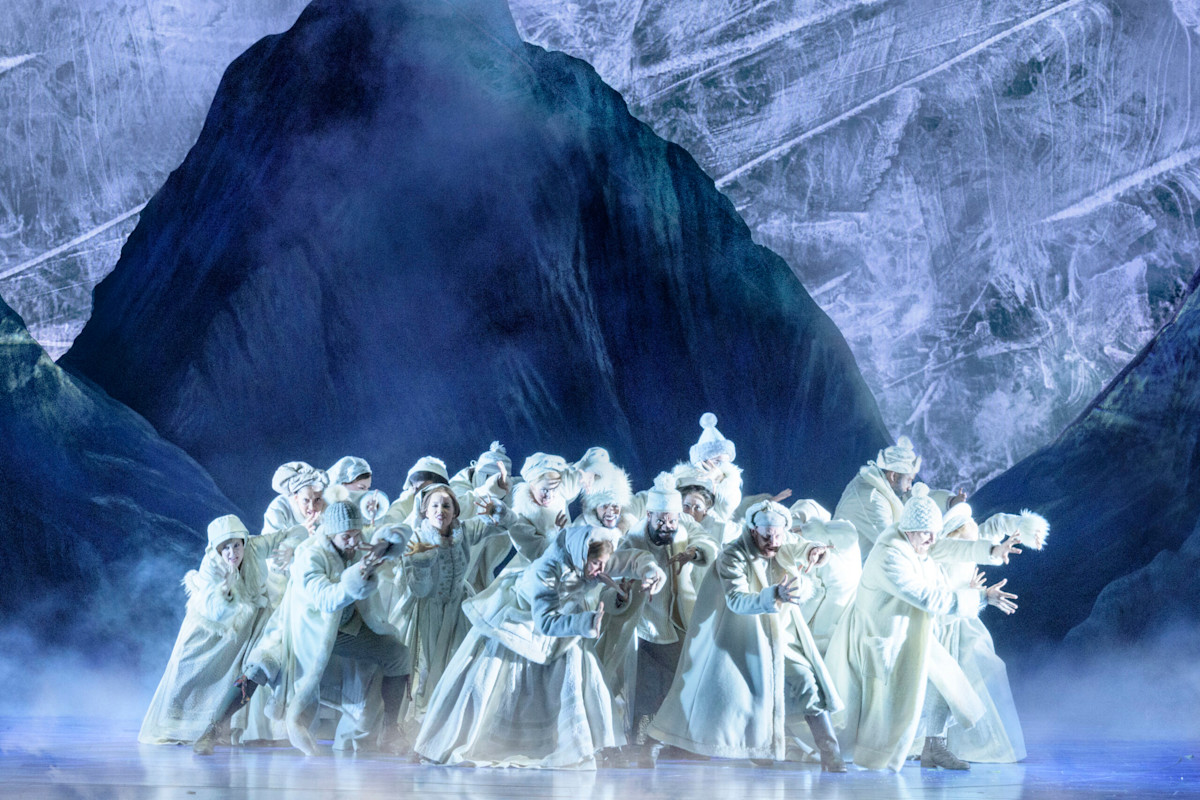
The extensive amounts of snow needed for Frozen were created using staggered emitters and 3D set elements. A series of exposed parameters enabled FRAY to build the look live on stage and fine-tune it until they created depth-filled snowscapes. “At points it would genuinely look like real snow falling,” Adam tells us; “You may look at the stage and think there is no video on stage at that moment, but if it were to be turned off, you would really notice the difference. We wanted a very painterly look, so, for the most part, we use projections softer nature. However, hours of colour balancing, subtle use of noise, blurs, etc. allowed the large LED screen to become a living painting full of soft and subtle living detail."
By choosing a real-time workflow, the team at FRAY were able to experiment creatively while delivering on time. This new flexibility enabled them to be reactive members in the design team of a complex production.